In today’s digital economy, businesses in Karachi handle massive amounts of customer data whether it’s client information, financial records, or digital communications. With increasing global scrutiny, data protection and privacy compliance in Pakistan is no longer optional it’s a legal and ethical necessity.
From local startups to multinational corporations, every business dealing with customer data must comply with Pakistani and international data privacy regulations to avoid penalties, data breaches, or reputational damage.
Digitalization has transformed the way companies operate. Whether you run an e-commerce site, a tech startup, or a consultancy serving global clients, protecting personal information is crucial for trust and compliance.
Failure to secure data can lead to:
Legal actions from customers or regulators
Financial penalties from the Federal Investigation Agency (FIA)
Business disruptions due to cyberattacks
Loss of client trust, especially for foreign partnerships

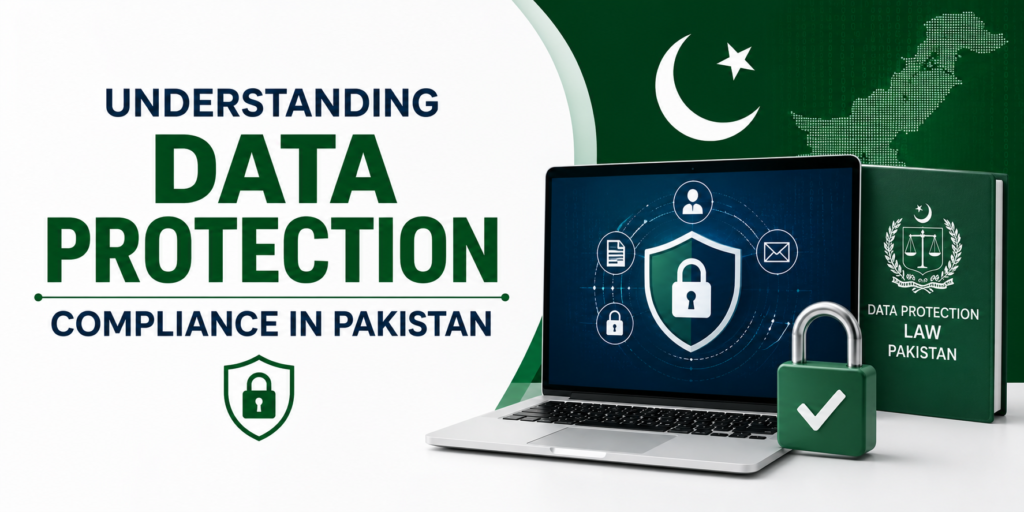
Pakistan’s current legal framework for data privacy is primarily governed by.
Prevention of Electronic Crimes Act (PECA) 2016
Pakistan Telecommunication (Re-Organization) Act 1996
Personal Data Protection Bill (Draft, 2023)
The Personal Data Protection Bill (PDPB) aims to regulate how personal data is collected, processed, stored, and transferred. Once enacted, it will introduce strict compliance requirements similar to the GDPR (EU).
Lawful Processing: Businesses must collect and process data for legitimate purposes only.
Data Subject Rights: Individuals can request access, correction, or deletion of their personal information.
Data Localization: Certain types of data must be stored within Pakistan.
Cross Border Transfers: Companies must obtain consent or ensure adequate protection when sharing data internationally.
Security Measures: Encryption, firewalls, and access controls must be implemented.

Pakistani businesses working with international clients (especially from the EU or US) often need to follow.
GDPR (General Data Protection Regulation)
CCPA (California Consumer Privacy Act)
ISO 27001 (Information Security Management)
Aligning with these standards not only ensures compliance but also builds credibility with foreign clients.
Nearly every organization handling customer or employee data must comply, including:
IT & software companies
Law firms and consulting agencies
E-commerce stores
Hospitals and health tech startups
Educational institutions
Real estate and financial service providers
Even small businesses are responsible for protecting customer data and preventing misuse.
Identify what data your company collects, where it’s stored, and who has access.
Draft a transparent privacy policy explaining how you handle user information. This should include consent forms, retention periods, and data sharing terms.
Use strong encryption, access restrictions, and firewalls to prevent unauthorized access.
Assign a responsible individual to oversee compliance and handle data related inquiries.
Always get consent before collecting or sharing personal data, especially in cross border scenarios.
Educate your staff about data handling, phishing risks, and reporting protocols.
A solid privacy policy should include.
Type of data collected
Purpose of collection
Data retention period
Security practices
Data subject rights
Contact details of your DPO
Pro Tip: Hire a data protection lawyer in Karachi to draft a legally valid and globally compliant policy.
Collecting unnecessary customer information
Failing to update privacy policies
Storing passwords or data in plain text
Ignoring data breach response planning
Not training staff on cyber hygiene
Avoiding these mistakes can significantly reduce your compliance risks.
MAH&CO. provides expert data protection and privacy compliance services in Karachi, helping businesses meet both local and international legal requirements.
Our services include:
Drafting privacy policies and consent forms
Compliance audits
Cross border data transfer consultation
Employee training sessions
Legal defense in case of data breach disputes
Book a consultation with MAH & CO. today for a customized data compliance strategy.
Data protection law in Pakistan includes regulations that control how personal and business data is collected, used, shared, and stored. The goal is to protect the privacy rights of individuals and prevent data misuse under laws like PECA 2016 and the proposed Personal Data Protection Bill 2023.
Yes. Currently, Pakistan follows the Prevention of Electronic Crimes Act (PECA) 2016, which covers data misuse and cybercrimes. The upcoming Personal Data Protection Bill 2023 will soon make privacy compliance mandatory for all businesses handling personal data.
To stay compliant, Karachi-based companies should:
Draft and publish a privacy policy
Obtain user consent before collecting data
Secure databases with encryption
Follow PECA 2016 and the new PDP Bill 2023 guidelines
Hiring a data protection compliance lawyer in Karachi can make this process much easier.
Yes. If your business works with EU or UK clients, you must comply with GDPR (General Data Protection Regulation). That includes proper consent management, secure cross-border data transfers, and transparency about how customer data is handled.
If your company fails to comply with data protection regulations, the FIA (Federal Investigation Agency) can issue fines, suspend operations, or take legal action. Violations may also lead to data breaches, customer distrust, and severe reputational damage.
Small businesses can improve data security by:
Using encrypted servers and password protection
Restricting employee access to sensitive data
Regularly updating cybersecurity systems
Consulting data protection experts or lawyers for compliance guidance
Even a basic privacy policy can help build trust and legal protection.
MAH & CO. offers specialized data protection and privacy compliance services in Pakistan, including:
Drafting GDPR and PDP Bill–compliant privacy policies
Conducting legal audits for data handling practices
Training teams on data security compliance
Providing legal representation for data breach or privacy disputes
Our Karachi-based lawyers help local and global clients ensure 100% legal compliance and data protection readiness.