Operating as a licensed broker on the Pakistan Stock Exchange (PSX) is both a commercial opportunity and a serious legal responsibility. Compliance is not a one time exercise completed at licensing; it is an ongoing legal obligation that directly impacts a broker’s reputation, financial stability, and license continuity.
As a best law firm in karachi with decades of experience advising regulated financial institutions, we have seen firsthand how minor compliance lapses escalate into regulatory penalties, suspension of trading rights, or even license cancellation. This guide explains how PSX brokers can maintain compliance, avoid regulatory risks, and protect their business.
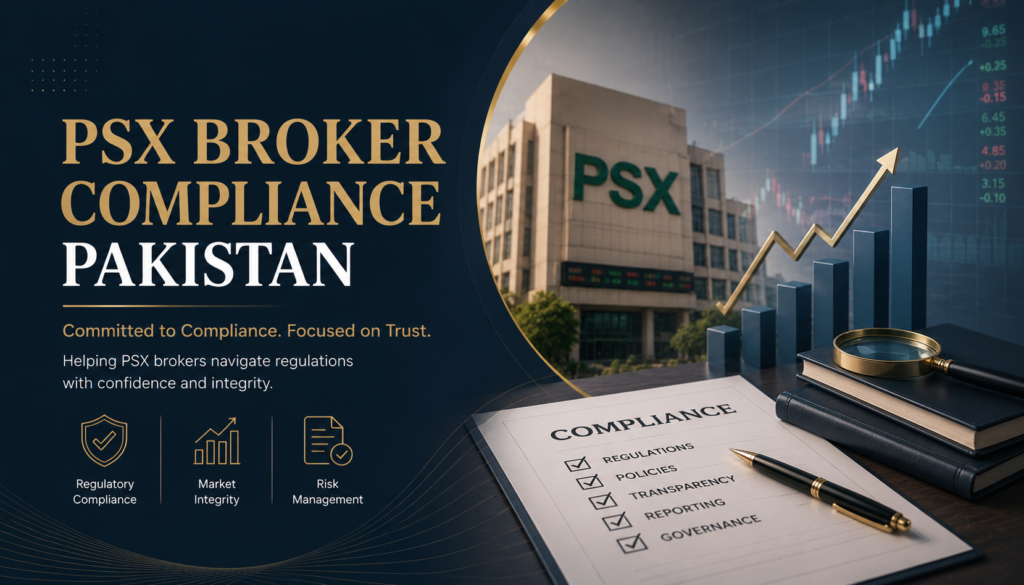
The Securities and Exchange Commission of Pakistan (SECP) is the primary regulator governing stock brokers. All PSX brokers must comply with.!
Securities Act, 2015
SECP Brokers and Agents Regulations
Anti Money Laundering (AML) and Counter Financing of Terrorism (CFT) Regulations
Code of Conduct for Brokers
Non compliance with SECP regulations is treated as a serious legal violation, regardless of intent.
PSX acts as the frontline regulator. It monitors.!
Daily trading activities
Client handling practices
Margin trading and exposure limits
Reporting accuracy and timeliness
PSX regularly conducts inspections and can recommend enforcement action to SECP.
A broker must continuously meet licensing conditions, including.!
Minimum paid up capital
Net capital balance requirements
Approved office premises
Qualified and SECP registered personnel
Failure to maintain capital adequacy is one of the most common reasons for regulatory action against brokers.
Know Your Customer (KYC) compliance is a legal obligation, not a formality. Brokers must.!
Verify client identity and beneficial ownership
Maintain updated KYC records
Conduct enhanced due diligence for high risk clients
Real world risk: Many enforcement cases arise from outdated or incomplete KYC files rather than intentional wrongdoing.
Every PSX broker must implement a documented AML/CFT framework, including.!
Risk based client classification
Transaction monitoring systems
Suspicious Transaction Reporting (STR)
Appointment of a Compliance Officer
Failure to file STRs on time
Inadequate transaction monitoring
Lack of AML training for staff
These violations can lead to heavy monetary penalties and reputational damage.
Internal controls protect brokers from.!
Unauthorized trading
Insider trading allegations
Market manipulation claims
A proper segregation of duties between trading, settlement, and compliance functions is essential.
PSX expects brokers to maintain.!
Exposure limit controls
Margin monitoring systems
Stress testing procedures
Weak risk controls often surface during market volatility, resulting in regulatory scrutiny.
Licensed brokers must submit.!
Periodic financial statements
Capital adequacy reports
Compliance certificates
Audit reports
Late or inaccurate reporting is treated as non compliance, even if no financial loss occurs.
SECP and PSX conduct scheduled and surprise inspections. Proper documentation and audit readiness are critical to passing inspections smoothly.
Brokers must avoid.!
Front running
Insider trading
False or misleading statements to clients
Unauthorized trading
Even unintentional misconduct can trigger investigations.
Client funds and securities must be strictly segregated. Misuse of client assets is one of the fastest ways to lose a brokerage license.
Failure to comply with PSX and SECP regulations can result in.!
Monetary penalties
Suspension of trading rights
Freezing of accounts
License cancellation
Criminal proceedings in severe cases
In practice, regulatory damage often extends beyond penalties and affects long-term business viability.
Conduct regular internal compliance audits
Update compliance manuals annually
Train staff on regulatory changes
Engage legal advisors proactively
Prevention is significantly more cost effective than regulatory defense.
MAH&CO. has extensive experience advising licensed brokers, investment firms, and financial institutions across Pakistan. Our services include.!
Ongoing SECP and PSX compliance advisory
Regulatory inspections and audit defense
AML/CFT framework development
Show cause notice replies and enforcement defense
License protection and renewal support
We believe in protecting our clients while ensuring justice is applied fairly, transparently, and in accordance with the law.
Maintaining compliance as a licensed broker on the Pakistan Stock Exchange is not optional it is a continuous legal responsibility. Brokers who invest in compliance infrastructure and expert legal support protect not only their license but also their credibility in Pakistan’s financial markets.
For brokers seeking clarity, protection, and long term regulatory stability, professional legal guidance makes a measurable difference.
PSX brokers must comply with SECP securities laws, PSX regulations, capital adequacy requirements, AML and KYC rules, client asset segregation, periodic reporting, and ethical trading standards.
SECP conducts both scheduled and surprise inspections. Brokers are expected to remain audit-ready year-round with updated records, compliance manuals, and reporting systems.
Yes. Serious or repeated non-compliance may lead to penalties, trading suspension, license cancellation, and in some cases criminal or civil proceedings.
The most frequent issues include weak KYC documentation, delayed regulatory filings, improper client fund segregation, and ineffective AML monitoring systems.
Yes. PSX and SECP regulations require brokers to appoint a qualified compliance officer responsible for regulatory reporting, internal controls, and liaison with regulators.
SECP may issue warning notices, impose fines, require corrective actions, suspend trading activities, or initiate enforcement proceedings depending on the severity of violations.
Ongoing compliance requires internal audits, staff training, real-time transaction monitoring, legal oversight, timely filings, and periodic compliance reviews.
Yes. AML and KYC compliance is one of the most heavily scrutinized areas. Failure to identify beneficial ownership or report suspicious transactions can trigger enforcement action.
In some cases, yes. However, SECP or PSX may restrict trading rights, impose supervision, or freeze certain operations during ongoing investigations.
MAH&CO. represents brokers in SECP inquiries, compliance audits, enforcement proceedings, and regulatory restructuring, helping protect licenses, reduce penalties, and restore compliance.