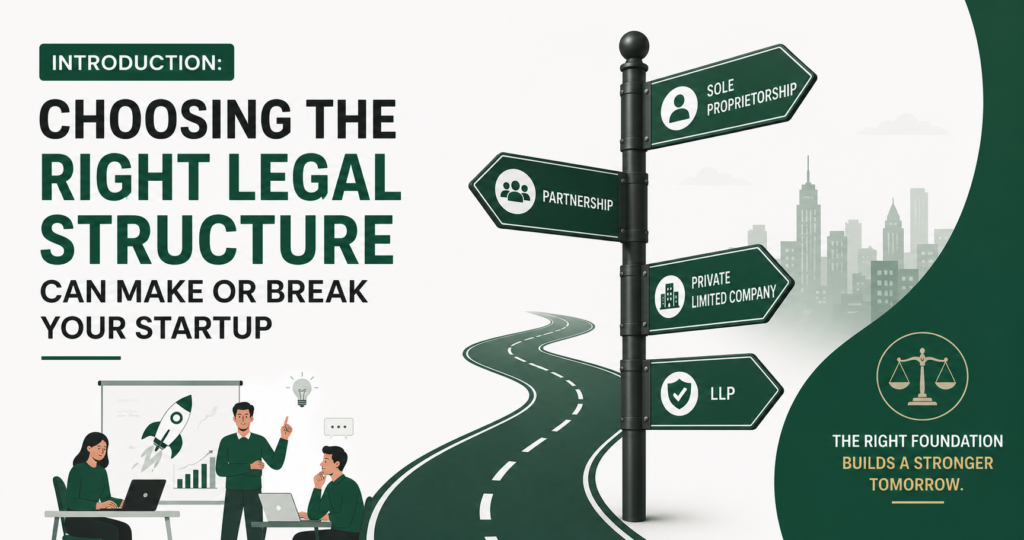
Starting a business in Pakistan is easier than ever in 2025, with improved digital registration systems, SECP online portals, and more startup-friendly policies. But before you launch your product or offer your services, you must make one of the most important business decisions:
Should you register as a Sole Proprietorship or a Private Limited Company?
Most founders choose a structure based on assumptions, not strategy.
But the right legal structure impacts.!
Taxes
Liability
Investment opportunities
Branding
Compliance requirements
Long-term business growth
This blog will simplify everything for you with clear comparisons, real-life examples, advantages, disadvantages, and expert recommendations.
Let’s begin.
A sole proprietorship is the simplest business structure.
It is owned, controlled, and operated by one person.
No separate legal entity
Owner is personally liable for business debts
Registered through FBR (NTN registration)
Easy to start and dissolve
Ideal for small-scale, low-risk businesses

A Private Limited Company (Pvt Ltd) is registered with the Securities and Exchange Commission of Pakistan (SECP).
Separate legal entity
Limited liability protection
Can have 2 to 50 shareholders
Can raise investments
Professional and credible business structure
Higher compliance requirements
If your business is new and your goal is to test the market without investing heavily, a sole proprietorship is ideal.
Writers, web developers, graphic designers, consultants, small shop owners this structure works best for them.
You only need:
NTN Registration
Bank Account
Invoice Book
A digital marketer earning from clients in Karachi can register quickly as a sole proprietor to open a business bank account and issue invoices.
Just get your FBR NTN and start operations.
No annual audits.
No legal filings.
No mandatory reporting.
You are the business.
You make all decisions.
If the business fails, your personal assets (car, home, savings) can be taken by creditors.
Angel investors, venture capitalists, and banks rarely invest in sole proprietors.
Anyone can copy your business name there is no legal protection unless you register it separately.
If you plan to scale, raise investment, or build a professional brand choose a Pvt Ltd company.
A private limited company adds credibility and professionalism, which clients and investors prefer.
Investors require.!
Share allotment
ESOP plans
Corporate structure
Compliance documents
A Pvt Ltd structure enables all this.
Financial losses do not affect your personal wealth.
Allows.!
SAFE notes
Equity distribution
Shareholding agreements
Large companies prefer working with Pvt Ltd entities due to their compliance.
Allows smooth business expansion.
You must maintain:
Annual filings
Financial statements
SECP updates
Registration costs more than a sole proprietorship.
You need a lawyer or consultant to maintain proper compliance.
A Lahore based e-commerce brand started as a sole proprietorship.
When they wanted to join major marketplaces and raise investment, they had to convert to Pvt Ltd.
A software house in Karachi upgraded to a private limited structure.
This helped them secure international corporate contracts worth millions.
A sole proprietor freelance developer from Rawalpindi faced problems receiving international payments over $25,000 due to compliance restrictions.
Converting to a Pvt Ltd solved the issue.
Every investor NIC, PSEB, VC firms, angel investors prefer.
Private Limited Company
because it ensures legal clarity, share distribution, and compliance.
MAH&CO. is one of Pakistan’s top business and corporate law firms offering complete company formation services.
They help with.!
Choosing the right legal structure
Registering a Private Limited Company with SECP
Drafting shareholder and founder agreements
Registering trademarks and protecting the brand
Tax planning & compliance
Legal advisory for investment rounds
Intellectual property protection
Whether you’re building a tech startup, e-commerce brand, marketing agency, or consultancy MAH&CO. guides you from idea to legal execution.
A Private Limited Company is generally better for startups that want to scale, raise investment, or work with corporate clients. A sole proprietorship is suitable for beginners, freelancers, and small home-based businesses.
A Sole Proprietorship has unlimited liability, meaning your personal assets are at risk.
A Private Limited Company is a separate legal entity, offering limited liability, better credibility, and more growth opportunities.
Yes. Investors, VCs, and angel networks only invest in Private Limited Companies because they allow share ownership, equity distribution, and legal compliance with SECP.
A sole proprietorship pays personal income tax, while a Private Limited Company pays corporate tax. Pvt Ltd companies also enjoy more tax planning and deduction benefits.
You can register a sole proprietorship by applying for an FBR NTN, opening a business bank account, and registering for sales tax if needed. It is simpler and faster than company registration.
You register through the SECP online portal by selecting the company name, uploading documents, paying fees, and completing incorporation forms. The process usually takes 2–5 working days.
Yes. Many startups begin as sole proprietors and later convert into a Private Limited Company when they scale or seek investment. This is a common practice in Pakistan.