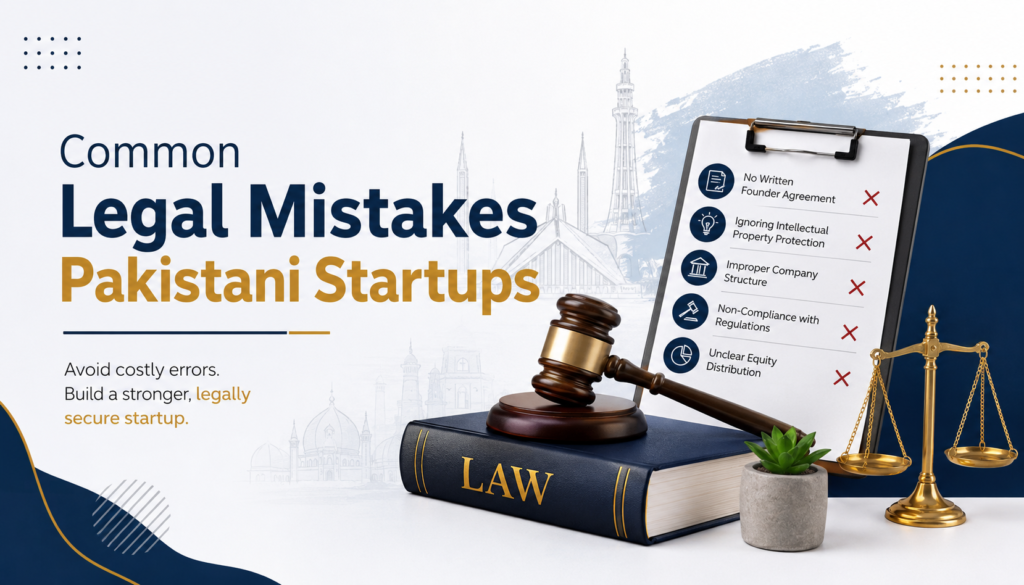
Starting a business in Karachi or across Pakistan is exciting but legal missteps can quickly turn that excitement into a long, costly headache. As a startup consultant working with many early stage companies, I’ve seen the same mistakes repeated, often preventable, yet potentially fatal to a startup’s growth. In this guide, I’ll walk you through the most frequent legal mistakes Pakistani startups commit and how to steer clear of them, especially with expert guidance from MAH&CO.
Legal compliance gives your startup credibility with investors, clients, vendors, and regulators. A clean legal foundation builds trust.
Non compliance or informal operations can lead to fines, business disruptions, inability to open a corporate bank account, or problems during fundraising.
As you scale, small mistakes amplify making future restructuring, funding, or exits painful. That’s why getting it right from the start is critical.
One of the earliest and most impactful mistakes is selecting the wrong business structure e.g. launching as a sole proprietorship or an informal partnership, instead of a proper private limited company. This mistake can expose founders to personal liability and limit growth potential.
Why it matters in Karachi / Pakistan context:
For small bootstrapped ventures, a sole proprietorship may seem easiest but it offers no liability protection.
A private limited company, though slightly more complex, gives legal protection, acceptance by clients or investors, and better ability to manage growth.
How to avoid it:
Evaluate your long term goals. If you plan to scale, onboard clients, or raise investment register as a private limited company through Securities and Exchange Commission of Pakistan (SECP).
Consult legal counsel early to weigh pros/cons.
Many startups rush registration, leading to mistakes in documentation wrong address, errors in Memorandum & Articles, failure to reserve a distinct company name, or neglecting digital signature requirements.
Risks:
Rejection of registration application or delays wasting time and money.
Difficulty opening bank accounts, entering contracts, or raising capital.
How to avoid:
Conduct a thorough name availability check avoid names too similar to existing firms, or use of restricted terms like “Federal,” “Authority,” etc.
Carefully prepare and check all documentation.
Use a qualified legal consultant to ensure compliance.
Many startups especially those with co-founders rely on verbal or informal agreements. They might split equity 50/50 by “feel” rather than actual contribution, or overlook the need for vesting schedules.
Why that’s dangerous:
When disagreements arise, there’s no written record of who owns what, who contributes what, or how exits/entry should work.
Equal splits without vesting or performance linked distribution can lead to deadlocks or resentment if some founders contribute more later.
How to avoid:
Draft a formal founders’ agreement / shareholders’ agreement at the outset.
Include clauses for equity vesting, exit conditions, role & responsibilities, decision making rights, and dispute resolution.
Revisit and update as the company evolves.
Startups sometimes neglect to register their brand, logo, product name, or other IP assets. This oversight can leave you vulnerable to imitation, brand theft, or costly rebranding later.
Real life risk: Imagine building a digital brand or product in Karachi, investing time & money only to find a competitor using a similar name or logo. Recovering brand value then becomes expensive and messy.
How to avoid:
As soon as you choose a brand name or logo, perform a trademark or brand search (through SECP recognized mechanisms/registry).
Register your IP as early as possible.
For software or designs done by third party developers, ensure you have written IP assignment agreements.
Many startups start operations with informal agreements handshake deals, verbal promises, or simple chat messages. While this may feel expedient, it is risky. Contracts that lack clarity can lead to misunderstandings, disputes, or even legal battles later.
Particularly common in Pakistan:
Not formalizing employment or service contracts, especially when hiring freelancers or remote contractors.
Overlooking employment law obligations (labor laws, statutory benefits, proper classification of employees vs contractors).
How to avoid:
Draft clear, written contracts with clients, vendors, and employees defining deliverables, payment terms, confidentiality, IP ownership, termination clauses, etc.
Use professional legal draftsmanship (don’t rely on generic templates).
For employees/contractors: ensure compliance with labour laws, proper classification, and formalize agreements.
Even after registering with SECP, many startups neglect ongoing statutory compliance such as annual return filing, updating changes in directorship/shareholding, holding required meetings, maintaining statutory registers, and proper bookkeeping.
Common pitfalls:
Missing deadlines (e.g. annual return, filing Form 29 on director changes).
Skipping board meetings, AGM, or failing to maintain minutes or statutory registers.
Consequences:
Fines, penalties, or even risk of deregistration.
Difficulty raising funding or entering formal contracts investors or clients may avoid firms lacking governance.
How to avoid:
Maintain a compliance calendar from day one.
Engage a company secretary or legal/vendor for compliance management.
Keep accurate, up to date statutory records and minutes.
Startups often ignore or delay obtaining necessary tax registrations (e.g. Federal Board of Revenue (FBR) registration, National Tax Number (NTN), or provincial tax registrations), sales tax registration (if required), withholding tax obligations, or proper accounting practices.
Why this matters:
Operating without proper registration may make you ineligible for government contracts, create difficulties opening bank accounts, or deny you the ability to issue legal invoices.
Late or inaccurate tax filings can result in penalties, bank freezes, or being blacklisted from the Active Taxpayers List (ATL).
How to avoid:
From the start: register with FBR for NTN (if required), and with provincial tax authorities or relevant municipal bodies/licensing authorities (for trade license, business licence, etc).
Maintain proper accounting, bookkeeping, and withholding tax records.
If you plan to hire employees or contractors, understand withholding obligations and compliance under labour laws.
Case Study Tech Startup “X” in Karachi
Founders A & B launch a software services startup. They begin as a simple registered partnership (informal) to save costs. They split profits 50/50 by handshake.
After six months, they acquire clients and raise seed funding interest. But when an investor requests company documents and structure, the founders realize their business lacks a proper legal structure. They have no shareholders’ agreement, no defined roles, and no IP registration for their brand.
They scramble to convert to a private limited company. But due to poor documentation, name conflicts, and missing filings, the registration is delayed costing months of valuable time.
Worse: a third party claims a similar brand name, forcing them to consider rebranding losing brand equity they had built.
When they finally register and onboard an auditor, they find they are already behind on compliance (no statutory registers, missing director details, no proper bookkeeping). As a result, some investor offers are retracted, and they face fines for delayed compliance.
Moral: Early informal operations may seem easier but as soon as you scale or engage clients/investors, legal gaps become costly.
With proper legal planning, founders’ agreements, IP protection, and statutory compliance from day one this scenario can be avoided.
MAH&CO. offers expert startup legal consultancy from choosing the correct business structure to handling registration with SECP, documentation, and compliance workflows.
They can draft or review founders’ agreements / shareholders’ agreements / employment contracts / vendor contracts to align legal responsibilities, equity splits, IP clauses, exit strategies, and more.
MAH&CO. helps with post registration compliance filling annual returns, updating records (shareholders, directors), maintaining statutory registers, corporate governance documentation, bookkeeping setup, and audit readiness.
They also support tax and regulatory compliance registering with FBR, obtaining NTN, structuring bookkeeping, withholding tax compliance, and tax return management.
For IP heavy startups MAH&CO. can handle intellectual property protection and brand registration to safeguard your brand identity and avoid future conflicts.
In short: with MAH&CO. by your side, legal hygiene becomes a foundation not an afterthought. Get In Touch..
Legal mistakes may not seem urgent when you’re launching a startup but as you grow, scale, or seek investment, those early oversights will weigh on you heavily. From wrong company structure and missing documentation to lack of IP protection and poor compliance these missteps threaten not just fines, but credibility, brand value, investor trust, and long term viability.
By knowing these common pitfalls and working proactively (ideally with a legal partner such as MAH&CO.), you can build a robust, compliant, and scalable business giving you a strong foundation for success in Karachi, Pakistan, and beyond.
Most startups in Pakistan make legal mistakes such as choosing the wrong business structure, skipping proper SECP registration, ignoring founders’ agreements, failing to protect intellectual property, operating without written contracts, and not keeping up with tax or statutory filings. These issues often become major problems during growth or fundraising.
A proper business structure — especially a Private Limited Company — protects founders from personal liability, builds investor trust, enables bank account opening, and supports long-term growth. Without the right structure, startups face compliance issues, tax complications, and difficulty signing big clients.
Improper SECP registration can delay operations, cause bank account issues, block investor onboarding, or even lead to legal penalties. Small mistakes like incorrect documents, wrong addresses, or missing filings often create problems when startups scale or get audited.
Yes. A founders’ or shareholders’ agreement is essential because it prevents conflicts, clarifies who owns what, and defines roles, decision-making powers, and exit rules. Without it, even small disagreements can turn into costly disputes that slow down growth.
If you don’t register your trademark or logo, someone else can legally claim it — forcing you to rebrand or fight a long legal battle. Proper IP protection ensures your name, logo, product design, software, or creative assets are legally yours in Pakistan.
Written contracts protect you from payment disputes, scope creep, IP theft, and employment misunderstandings. Whether it’s clients, employees, freelancers, or vendors formal agreements clarify expectations, deliverables, timelines, and legal responsibilities.
After incorporation, startups must file annual returns, maintain statutory registers, update shareholder or director information, hold board meetings/AGMs, manage bookkeeping, and stay updated with tax filings. Missing these requirements can lead to penalties or compliance warnings.
MAH&CO. offers complete startup legal consultancy in Karachi — from SECP registration and drafting founders’ agreements to contract creation, IP protection, tax registration, and ongoing compliance. Their end-to-end support helps startups avoid costly legal mistakes and build a strong, compliant foundation from day one.